Introduction: This article provides a comprehensive overview of the concept, application process, and key considerations for static IP servers for native residences in Malaysia. It offers practical recommendations and compliance guidelines for businesses or individuals seeking reliable outbound IPs and localized access, serving as a reference guide before implementation.
A static IP server for residential use in Malaysia refers to a static public IP address assigned from local residential IP ranges in Malaysia. It is used to permanently assign to devices or servers, ensuring a stable outbound IP address that closely resembles that of ordinary home users. It is suitable for localized access, content verification, and long-term connections.
Before applying, evaluate the use case (such as crawlers, remote access, or localized services), bandwidth requirements, and network topology. Also, confirm whether there is a stable power supply and backup network, as well as whether additional services such as a fixed public IP address and reverse DNS are needed.
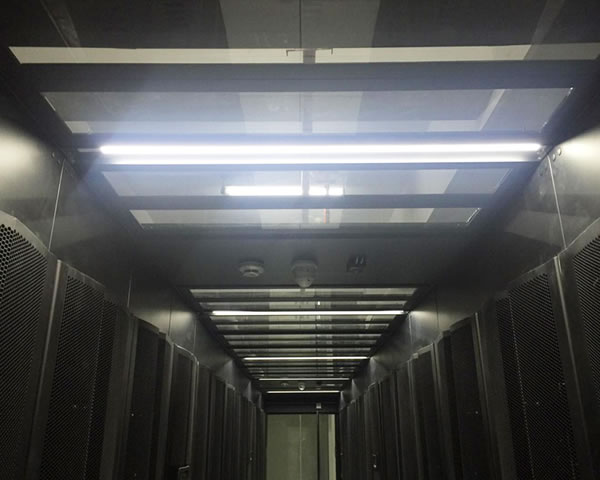
It is very important to understand the policies of residential internet service providers regarding static IPs or server hosting. Some residential broadband plans have explicit restrictions on running servers or require additional permits. It is recommended to communicate with the property management and ISP in advance to confirm compliance, in order to avoid risks of service disruption or penalties later on.
Applications usually require identification information, proof of address, and contact details. Business users may need to provide company registration documents and proof of identity for the person in charge. Having all the necessary materials ready can speed up approval and deployment, ensuring that the information matches the actual usage scenario.
The standard process includes selecting a service provider, submitting applications and materials, waiting for ISP or platform review, signing a usage agreement, assigning an IP address, and conducting online testing. Every step should document the communications and contract terms to facilitate tracking and protect rights.
When making a choice, prioritize the service provider’s network quality, bandwidth stability, customer reviews, and technical support capabilities. Also confirm whether local technical support, fault response time, and scalability are provided to meet long-term operational needs.
After submitting an application, it usually enters the identity and address verification stage, with some service providers conducting verification remotely or in person. After verification, an agreement will be signed and IP allocation will be arranged. It is recommended to save all confirmation emails and copies of the contract.
After being assigned a static IP, the firewall should be configured according to best practices, unnecessary ports should be restricted, and logging should be enabled. In addition, it is recommended to set bandwidth limits, monitor for abnormal traffic, and establish regular backup and recovery strategies to reduce operational risks.
Complying with local laws and regulations and ISP usage policies is a basic requirement. Use IP addresses responsibly to avoid sending spam or engaging in illegal activities, while complying with data protection and privacy requirements. Consult local legal advisors when necessary to ensure compliance.
To apply for a static IP server for a native Malaysian residence, it is necessary to make preliminary preparations, select a compliant service provider, and submit the required documents according to the process. During deployment, emphasis is placed on secure configuration and compliant operations, along with the establishment of monitoring and emergency response plans, to meet stable and long-term network exit requirements.
- Latest articles
- How To Evaluate The Provider's Line Stability When Choosing A Hong Kong CN2 Cloud Host
- Interpretation Of The Impact Of Hong Kong Native IP Segments On Cross-Border Advertising Targeting And Regional Rules
- Key Points For Evaluating Network Quality And Service SLA Of Taiwanese Native IP Cloud Servers By Suppliers
- Common Specifications Of Singapore VPS CN2 Comparisons For Bandwidth And Hardware Configuration Selection
- Marketing Statement: Choosing This Server To Set Up In The United States Brings Business Expansion And Increased Trust
- Comprehensive Analysis Report On Malaysian CN2 Operational Quality And Tri-network Interconnection Effectiveness
- Technical Depth: How Hong Kong Cloud Servers Perform In Container And Microservices Scenarios
- How To Use Hong Kong VPS Cloud Servers To Improve Website Access Speed In The US Stock Market
- Discussion On The Auxiliary Role Of Native Residential IPs In Vietnam In Improving Local Search Engine Indexing
- CN2 Line Japan: Advantages And Real-World Cases In Asian Interconnection
- Popular tags
-

The Malaysian Cn2 Evaluation Sample Contains Comparative Data Of Different Operators And Time Periods.
based on the evaluation samples of malaysia's cn2 lines, the delay, packet loss and bandwidth performance of different operators and different time periods are compared, and methods, data points and practical suggestions are provided for reference in network selection and monitoring. -

Application Scenarios And Case Analysis Of Triple Network Cn2 In Malaysia
in-depth discussion of the application scenarios and case studies of triple network cn2 in malaysia, and analysis of its impact on business and network optimization. -

The Impact Of Malaysian Lol Server Popularity And Event Resource Distribution On Novices
analyze how the popularity of the malaysian lol server and the distribution of event resources affect the matching experience, learning curve and community integration of novice players, and give practical suggestions to help novices adapt to the environment faster.